Fertility Treatment: Step-by-Step Timeline
How Long Does Fertility Treatment Take? Understanding IVF, Egg Freezing, IUI, and Embryo Transfer Timelines
Whether someone is considering IVF, egg freezing, IUI, or embryo transfer, understanding the general treatment timeline can help make the process feel more manageable and easier to plan around work, travel, and daily life. At the same time, it is important to remember that fertility treatment is highly individual. Timelines can vary depending on medical history, hormone response, treatment goals, and how the body responds during each stage.
Rather than following one fixed schedule, fertility treatment is usually adjusted to the individual situation.
Why Fertility Treatment Timelines Can Differ
No two patients follow exactly the same timeline. Factors that may influence treatment duration include:
- menstrual cycle timing
- ovarian response to medication
- whether embryos are transferred fresh or frozen
- whether genetic testing is performed
- medical conditions such as PCOS or endometriosis
- how many monitoring visits are needed
Some patients move through treatment quickly, while others may require additional preparation or monitoring before proceeding to the next step.
Understanding Common Fertility Treatment Timelines
IUI (Intrauterine Insemination) Timeline
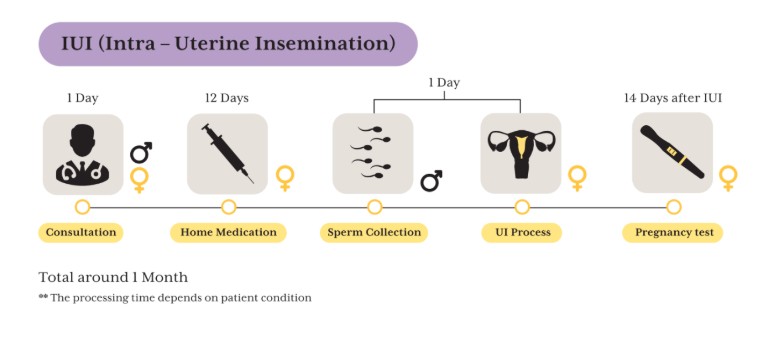
IUI is often one of the simpler fertility treatments and may be recommended in selected situations, depending on age, diagnosis, and fertility history. A typical IUI cycle may take approximately 1 month, usually within one menstrual cycle.
The general process may include:
- initial consultation and fertility assessment
- ovulation tracking or mild stimulation medication
- sperm preparation
- insemination procedure timed around ovulation
- pregnancy testing approximately two weeks later
Compared to IVF, IUI is generally less invasive and involves fewer laboratory procedures.
Egg Freezing Timeline
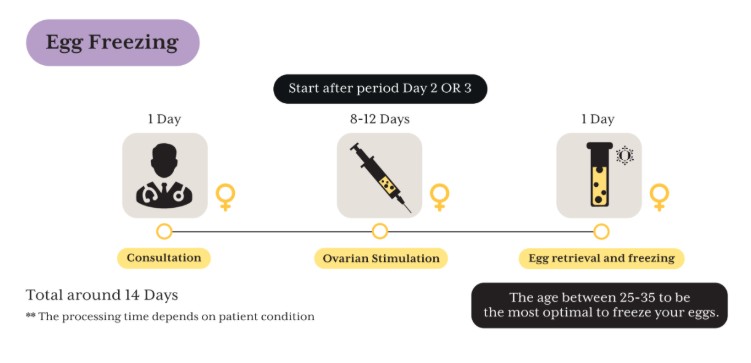
The process usually includes:
- fertility consultation
- ovarian stimulation injections for approximately 8–12 days
- ultrasound and blood-test monitoring
- trigger injection to prepare eggs for retrieval
- egg retrieval procedure
egg freezing and storage
The retrieval procedure itself is usually short, although recovery time may vary slightly between individuals. Egg quantity and response differ from person to person, some patients may undergo more than one cycle depending on their goals and ovarian reserve.
IVF Timeline (Fresh Embryo Transfer)
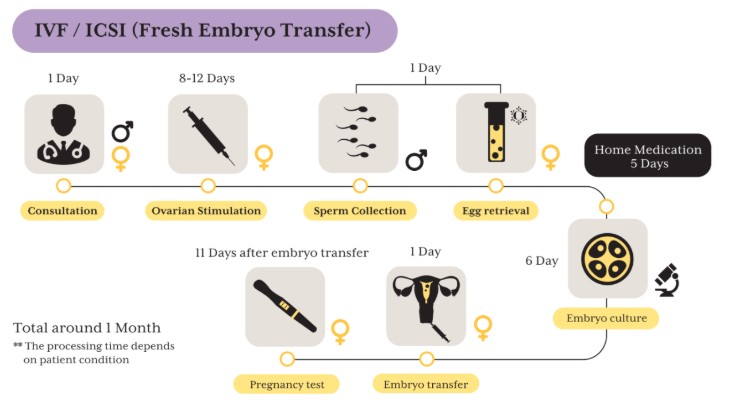
IVF treatment involves several stages, including fertilisation and embryo development inside the IVF laboratory. A typical IVF cycle with a fresh embryo transfer often takes approximately 1 month, although timing varies depending on individual circumstances.
The IVF process may include:
1. Initial Consultation and Fertility Assessment
The process usually begins with consultations, fertility history review, hormone testing, ultrasound assessment, and semen analysis. These evaluations help the medical team understand the overall fertility picture before treatment begins.
2. Ovarian Stimulation
Hormone medications are used to stimulate the ovaries to produce multiple eggs over approximately 8–12 days.
3. Monitoring Appointments
Ultrasound scans and blood tests help monitor follicle growth and hormone response throughout stimulation.
4. Egg Retrieval and Sperm Collection
Eggs are collected during a short procedure performed under sedation. On the same day, a sperm sample is typically collected and prepared in the embryology laboratory for fertilisation.
5. Fertilisation and Embryo Culture
Eggs and sperm are combined in the embryology laboratory through conventional IVF or ICSI. Embryos then continue developing during embryo culture, usually for five to six days until the blastocyst stage.
6. Home Medication Before Embryo Transfer
In many fresh embryo transfer cycles, patients may continue medications at home for several days before the embryo transfer procedure. These medications help support the uterine environment and prepare the body for transfer.
7. Embryo Transfer
If conditions are considered suitable, embryo transfer may take place within the same treatment cycle.
8. Pregnancy Testing
Pregnancy testing usually takes place around 10–14 days after embryo transfer.
IVF + Frozen Embryo Transfer (FET) Timeline
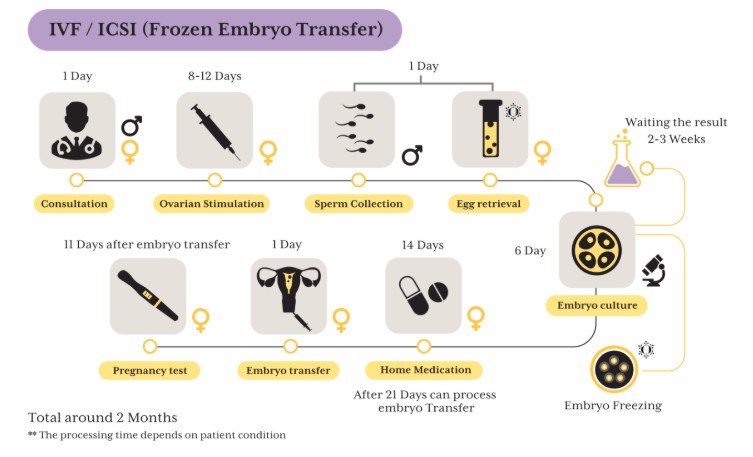
Not all IVF cycles involve an immediate fresh embryo transfer. In some cases, embryos created during IVF are frozen first and transferred during a later cycle. This is known as a Frozen Embryo Transfer (FET) cycle. The overall IVF process is generally similar to a fresh IVF cycle in the beginning, including consultations, ovarian stimulation, egg retrieval, sperm collection, fertilisation, and embryo culture. However, instead of transferring the embryo within the same cycle, the embryos are frozen and the transfer takes place at a later stage.
An IVF cycle followed by frozen embryo transfer may take approximately 2 months or longer, depending on the individual treatment plan, patient condition, whether additional testing such as PGT is performed, and how the transfer cycle is prepared.
Reasons embryos may be frozen before transfer include:
- allowing the body time to recover after ovarian stimulation
- additional embryo testing such as PGT
- timing considerations
- hormone or uterine factors
planning transfer during a later cycle considered more suitable for implantation
The IVF + FET process may include:
Initial Consultation and Fertility Assessment
The process usually begins with consultations, fertility history review, hormone testing, ultrasound assessment, and semen analysis.
2. Ovarian Stimulation
Hormone medications are used to stimulate the ovaries to produce multiple eggs over approximately 8–12 days.
3. Monitoring Appointments
Ultrasound scans and blood tests help monitor follicle growth and hormone response throughout stimulation.
4. Egg Retrieval and Sperm Collection
Eggs are collected during a short procedure performed under sedation. On the same day, a sperm sample is typically collected and prepared in the embryology laboratory for fertilisation.
5. Fertilisation and Embryo Culture
Eggs and sperm are combined through conventional IVF or ICSI. Embryos continue developing during embryo culture, usually for five to six days until the blastocyst stage.
6. Optional PGT-A Testing
In some cases, embryos may undergo Preimplantation Genetic Testing for Aneuploidy (PGT-A) before transfer. This involves taking a small sample of cells from the embryo for genetic analysis. Because the testing process requires laboratory analysis, results may take approximately 2–3 weeks, depending on the case and laboratory workflow.
7. Embryo Freezing
Suitable embryos may be frozen and stored for future transfer.
8. Preparation for Frozen Embryo Transfer
At a later stage, the uterine lining is prepared for embryo transfer. This may involve home medication, monitoring appointments, and timing adjustments depending on the treatment plan.
9. Thawing and Embryo Transfer
The frozen embryo is thawed and transferred during the planned transfer cycle.
10. Pregnancy Testing
Pregnancy testing usually takes place around 11 days after embryo transfer.
Because the embryo transfer happens in a later cycle, IVF with frozen embryo transfer may involve a longer overall timeline compared to fresh embryo transfer cycles.
Sperm Freezing Timeline
- fertility preservation before medical treatment
- planned IVF or ICSI cycles
- overseas or travelling patients
- situations where sperm collection on treatment day may be difficult
- consultation and screening
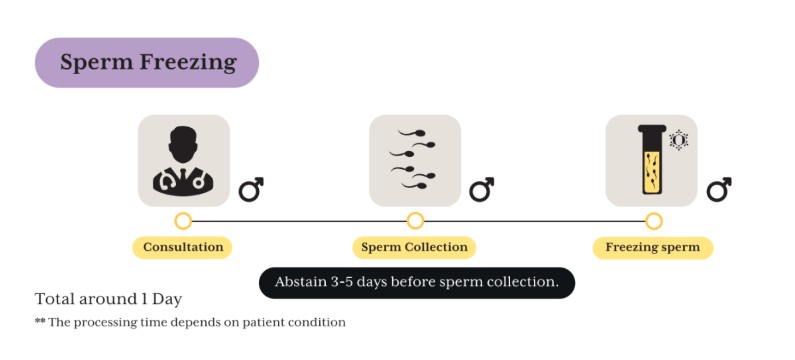
- a recommended abstinence period of approximately 3–5 days before sperm collection
- semen collection
- sperm freezing and storage
The recommended abstinence period helps optimise the sperm sample for freezing and analysis. Depending on the individual situation, the medical team may provide more specific instructions before the appointment.
Why Some IVF Timelines Change During Treatment
One important thing to understand is that fertility treatment does not always progress exactly according to the original schedule. For example:
- medication response may differ from expectations
- embryos may develop differently during culture
- additional monitoring may be needed
- transfer timing may change depending on hormone levels or uterine conditions
This is one reason why fertility treatment is often described as a personalised process rather than a fixed protocol. As discussed in our guide to what affects IVF success rates, treatment decisions are usually adjusted based on how the body and embryos respond during each stage.
Planning Fertility Treatment Around Work, Travel, and Daily Life
Many patients try to balance fertility treatment alongside work responsibilities, travel plans, or family commitments. Depending on the treatment type, some appointments may need to occur at specific times, particularly during ovarian stimulation and ovulation monitoring. For international patients travelling for treatment, planning timelines in advance may also help with:
- travel scheduling
- accommodation planning
- leave arrangements
- coordinating follow-up care
Some parts of the process may be completed remotely before arriving at the clinic, depending on the situation.
Why Understanding the Timeline Can Reduce Stress
One reason fertility treatment can feel overwhelming is uncertainty. Understanding the general flow of treatment, even knowing approximately what happens next, can help patients feel more prepared and more involved in the process. This does not remove uncertainty completely, but it often makes the journey feel more structured and manageable.
GenPrime Genea’s Approach
GenPrime Genea’s approach to fertility care combines embryology, genetics, and clinical planning as part of an integrated IVF programme. Built on Genea’s 40 years of IVF and fertility expertise in Australia, GenPrime Genea combines advanced embryology and genetic testing to support individuals and couples on their fertility journey.
This includes personalised treatment planning, IVF laboratory technology, embryo culture systems, and coordination that takes each patient’s timeline and medical situation into account.
Frequently Asked Questions
Q: How long does IVF usually take from start to embryo transfer?
A: A typical IVF cycle may take approximately 4–6 weeks, although timelines can vary depending on ovarian response, embryo development, and whether embryos are transferred fresh or frozen.
Q: How long does egg freezing take?
A: Most egg freezing cycles take around 2–3 weeks from the start of ovarian stimulation to egg retrieval and freezing.
Q: Is frozen embryo transfer faster than a full IVF cycle?
A: In many cases, yes. Frozen embryo transfer cycles usually do not involve ovarian stimulation or egg retrieval, which may make the process shorter and less intensive compared to a full IVF cycle.
Q: Can I continue working during fertility treatment?
A: Many patients continue working during fertility treatment, although appointment frequency may increase during monitoring periods. The experience varies depending on the treatment type and individual response to medication.
Q: Why do some IVF timelines change during treatment?
A: Treatment timelines may change because hormone response, embryo development, or uterine conditions can vary during the cycle. Fertility treatment is often adjusted based on these factors.
Q: Can international patients plan IVF treatment timelines in advance?
A: In many cases, yes. International patients often coordinate treatment schedules, travel plans, and monitoring appointments in advance, although flexibility may still be needed depending on how treatment progresses.