What Is PRP in IVF? How Can It Support Fertility Treatment?
What Is PRP in IVF? How Can It Support Fertility Treatment?
For couples planning to conceive through IVF (In Vitro Fertilization) or ICSI (Intracytoplasmic Sperm Injection), the quality of eggs and embryos is not the only important consideration. The overall readiness of the reproductive system is another factor that deserves attention.
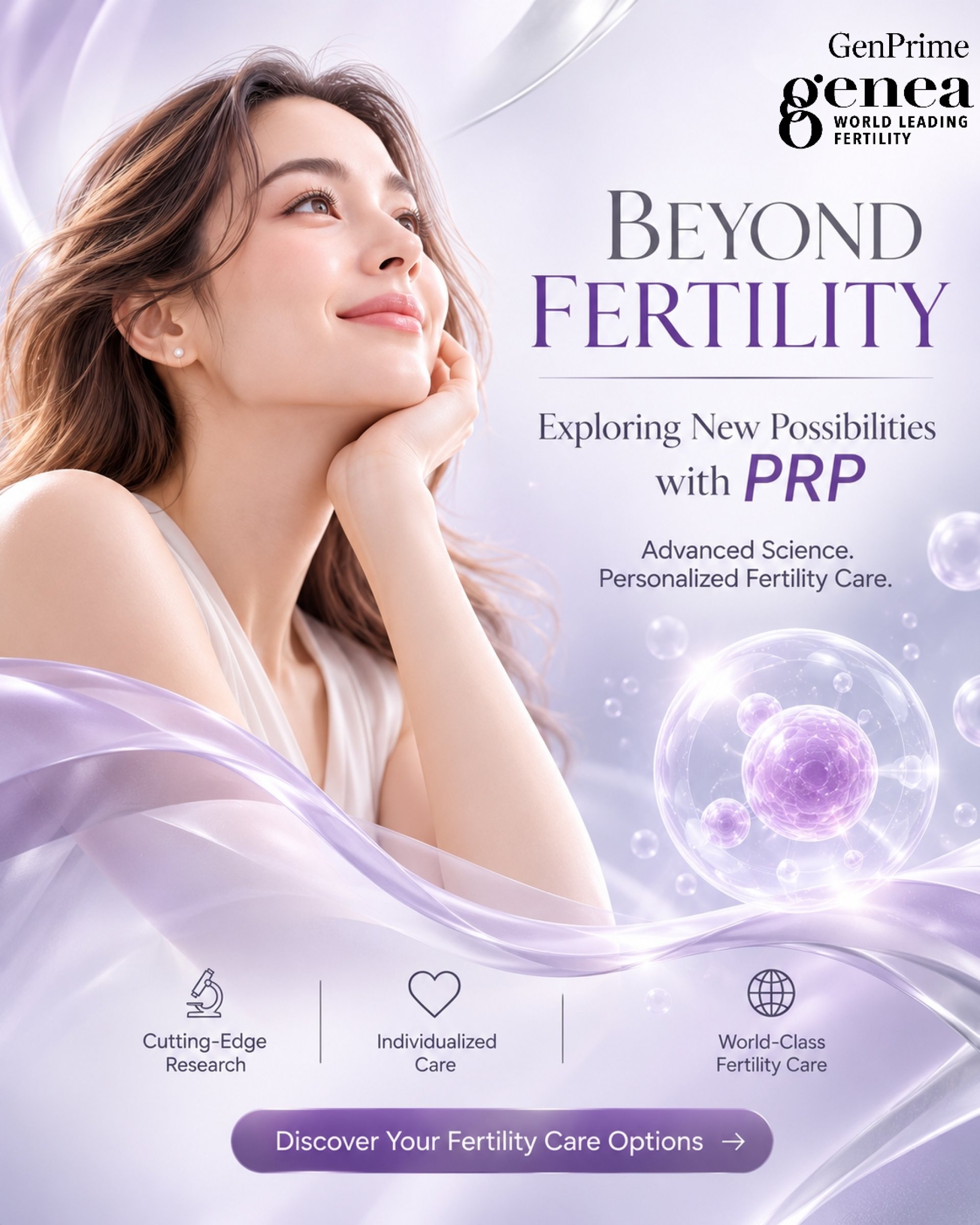
Today, PRP (Platelet-Rich Plasma) is gaining interest as an adjunctive approach in reproductive medicine. Research has explored its potential role in supporting ovarian function and improving the endometrial environment.
In this article, we will explore what PRP is, how it may be used alongside IVF, and who may be considered for this treatment approach.
What Is PRP?
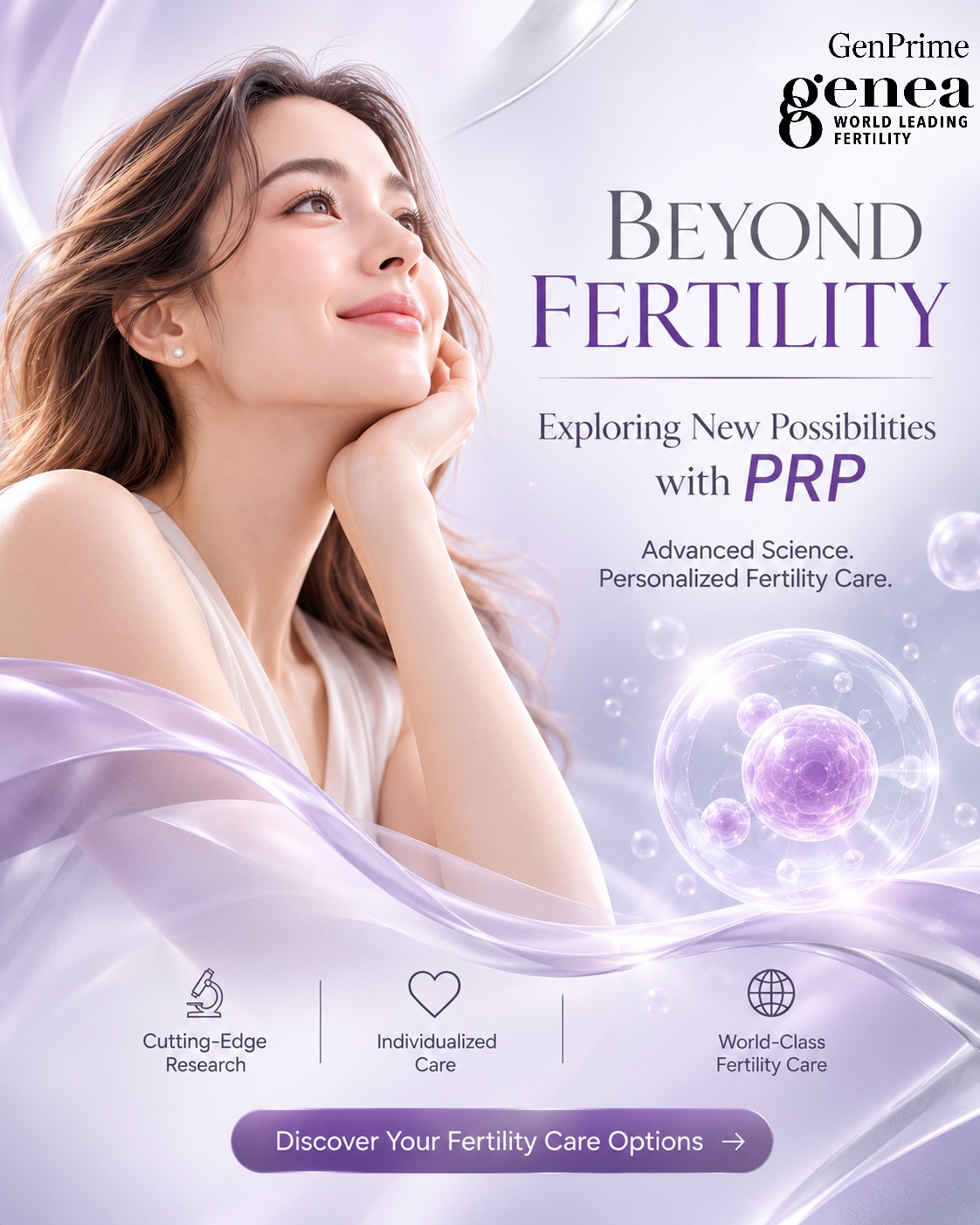
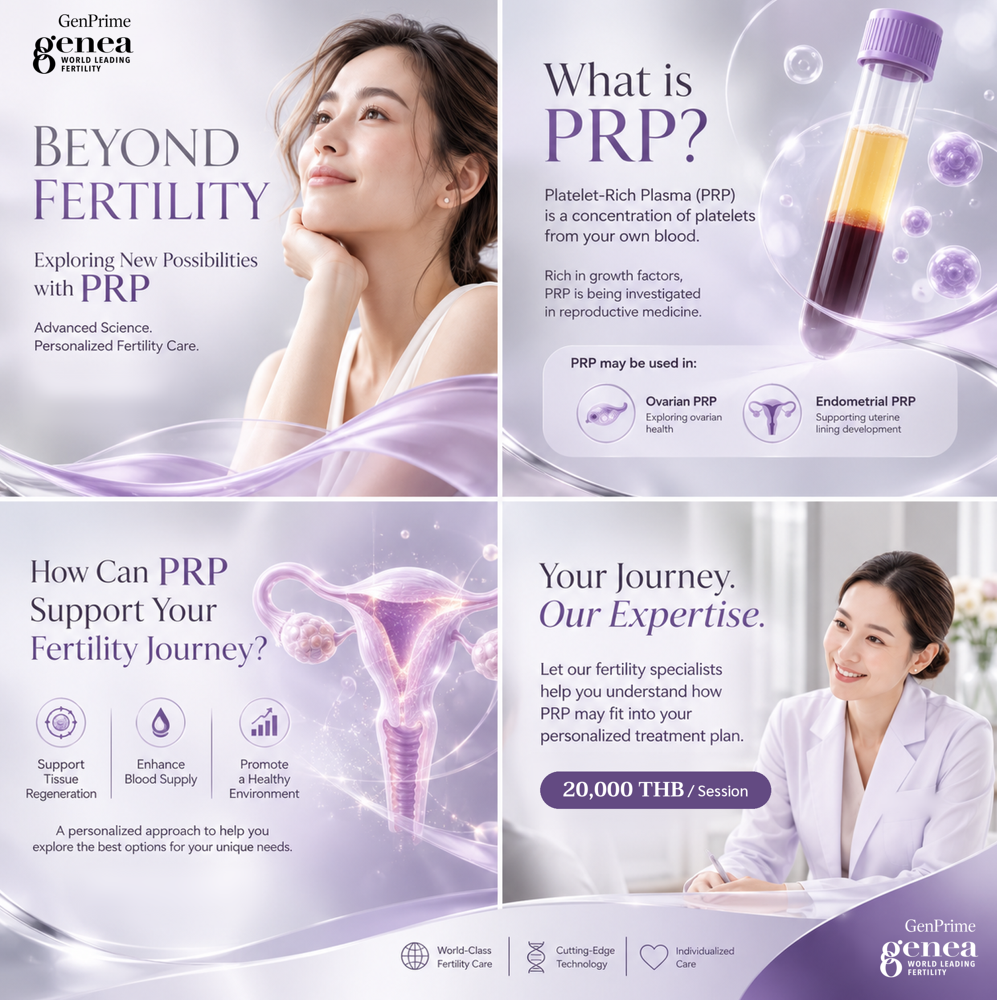
PRP, or Platelet-Rich Plasma, is a concentrated preparation of platelets derived from the patient's own blood through a blood separation and centrifugation process.
Platelets contain various biological substances, including Growth Factors, which are involved in tissue repair, blood vessel formation, and cellular function.
Due to these properties, PRP has been studied in several medical fields, including reproductive medicine, to evaluate its potential role in supporting fertility treatment.
How Can PRP Support IVF Treatment?
In fertility treatment, PRP has been studied as an adjunctive approach in two main areas:
1. Ovarian PRP: Supporting Ovarian Function
Ovarian PRP involves the administration of PRP into the ovarian tissue. The underlying concept is that Growth Factors may help support the tissue environment within the ovaries.
Research has primarily focused on women with Diminished Ovarian Reserve or Poor Ovarian Response, particularly those who have shown a limited response to ovarian stimulation.
Studies aim to evaluate whether PRP treatment may influence ovarian function and the response to ovarian stimulation during IVF treatment.
However, current evidence is insufficient to confirm that Ovarian PRP can reliably increase egg numbers or restore ovarian function.
2. Endometrial PRP: Supporting the Uterine Lining
Endometrial PRP involves the administration of PRP into the uterine cavity to investigate its potential effects on the endometrial environment.
The endometrium, or uterine lining, plays an important role in supporting embryo implantation following Embryo Transfer.
For this reason, the use of PRP has attracted research interest, particularly among women with Thin Endometrium or a history of repeated implantation failure.
However, further research is still needed to establish the effectiveness and safety of this treatment approach.
Who May Be Considered for PRP Treatment?
PRP may be considered as an adjunctive treatment approach for certain patients, depending on their individual medical conditions. These may include:
- Women with Diminished Ovarian Reserve.
- Women with a history of Poor Ovarian Response to stimulation.
- Women with Thin Endometrium.
- Women with a history of repeated unsuccessful embryo transfers.
- However, having any of these conditions does not automatically mean that PRP treatment is necessary. A physician should carefully assess each patient's medical history, test results, and individual suitability before recommending treatment.
Can PRP Increase the Chances of Pregnancy Through IVF?
Although preliminary research on PRP in reproductive medicine has shown some promising findings, current evidence remains limited due to differences in study designs, sample sizes, and treatment protocols.
Therefore, it is not yet possible to conclusively determine whether PRP can improve pregnancy rates or Live Birth Rates.
PRP should be considered an investigational adjunctive approach rather than a replacement for standard IVF or ICSI treatment. It should also not be viewed as a guarantee of successful pregnancy.
Frequently Asked Questions About PRP and IVF
Q1: What is PRP in IVF?
A: PRP is a concentrated preparation of platelets derived from the patient's own blood. It has been studied as an adjunctive approach in IVF treatment, particularly in relation to ovarian function and the endometrial environment.
Q2: Can PRP improve egg quality?
A: Currently, there is insufficient clinical evidence to confirm that PRP can directly improve egg quality, although its potential effects on ovarian function have been studied.
Q3: Can PRP help increase endometrial thickness?
A: Some studies have reported that Endometrial PRP may help increase endometrial thickness in certain patient groups. However, its effects on pregnancy rates and live birth outcomes have not yet been conclusively established.
Q4: Can PRP be used alongside ICSI treatment?
A: PRP may be considered as an adjunctive approach for patients undergoing IVF or ICSI, depending on their medical indications and treatment plans. A fertility specialist should assess the suitability and timing of the procedure.
Q5: Does everyone undergoing IVF need PRP?
A: No. PRP is not a standard procedure required for every IVF patient. Its use depends on individual reproductive conditions, medical history, and the physician's clinical judgment.
Personalized Fertility Treatment Planning
There is no single fertility treatment approach that works for everyone. A comprehensive assessment of individual reproductive health is an important first step toward developing an appropriate treatment plan.
At GenPrime Genea, we focus on personalized fertility care, taking into consideration each patient's health condition, medical history, and individual needs to support them throughout their journey toward parenthood.
If you are planning to undergo IVF or ICSI and would like to learn more about PRP, consult our fertility specialists to determine whether this approach may be suitable for you.