IUI or ICSI: How Do Doctors Decide Which Fertility Treatment Is Suitable?
IUI or ICSI
: How Do Doctors Decide Which Fertility Treatment Is Suitable?
When you are exploring fertility treatment, you may come across several options, including IUI (Intrauterine Insemination) and ICSI (Intracytoplasmic Sperm Injection). But how do you know which approach may be suitable for you?
The answer depends on several individual factors, including your age, fertility history, ovarian reserve, sperm quality, fallopian tube health, and any previous fertility treatments.
While IUI and ICSI are both used to help couples achieve pregnancy, they work in very different ways. Understanding these differences can help you have a more informed conversation with your fertility specialist.
What Is the Difference Between IUI and ICSI?
The main difference is where and how fertilisation takes place.
With IUI, specially prepared sperm is placed directly into the uterus around the time of ovulation. Fertilisation then occurs naturally inside the body.
With ICSI, a single sperm is injected directly into an egg in the laboratory as part of an IVF treatment. Once fertilisation occurs and an embryo develops, the embryo can be transferred into the uterus.
In simple terms:
- IUI helps sperm reach the egg more easily.
- ICSI helps a sperm fertilise an egg in the laboratory.
Because ICSI is performed as part of IVF, it generally involves more steps and procedures than IUI.
How Does IUI Work?
IUI is a relatively simple fertility treatment. Depending on your individual circumstances, it may be performed during a natural menstrual cycle or with medication to stimulate ovulation.
Around the time of ovulation, a semen sample is prepared in the laboratory to concentrate the healthiest and most motile sperm. The prepared sperm is then placed directly into the uterus using a thin catheter.
The aim is to increase the number of sperm that reach the fallopian tubes, where fertilisation can occur naturally.
Who May Be Suitable for IUI?
IUI may be considered for people with certain fertility factors, such as:
Unexplained infertility
- Mild abnormalities in sperm quality or motility
- Ovulation difficulties
- Certain cervical factors
- The use of donor sperm
However, IUI may not be suitable when there are significant problems affecting the fallopian tubes or when more complex fertility factors are present.
What Is ICSI?
ICSI stands for Intracytoplasmic Sperm Injection. It is a specialised fertilisation technique used during IVF treatment.
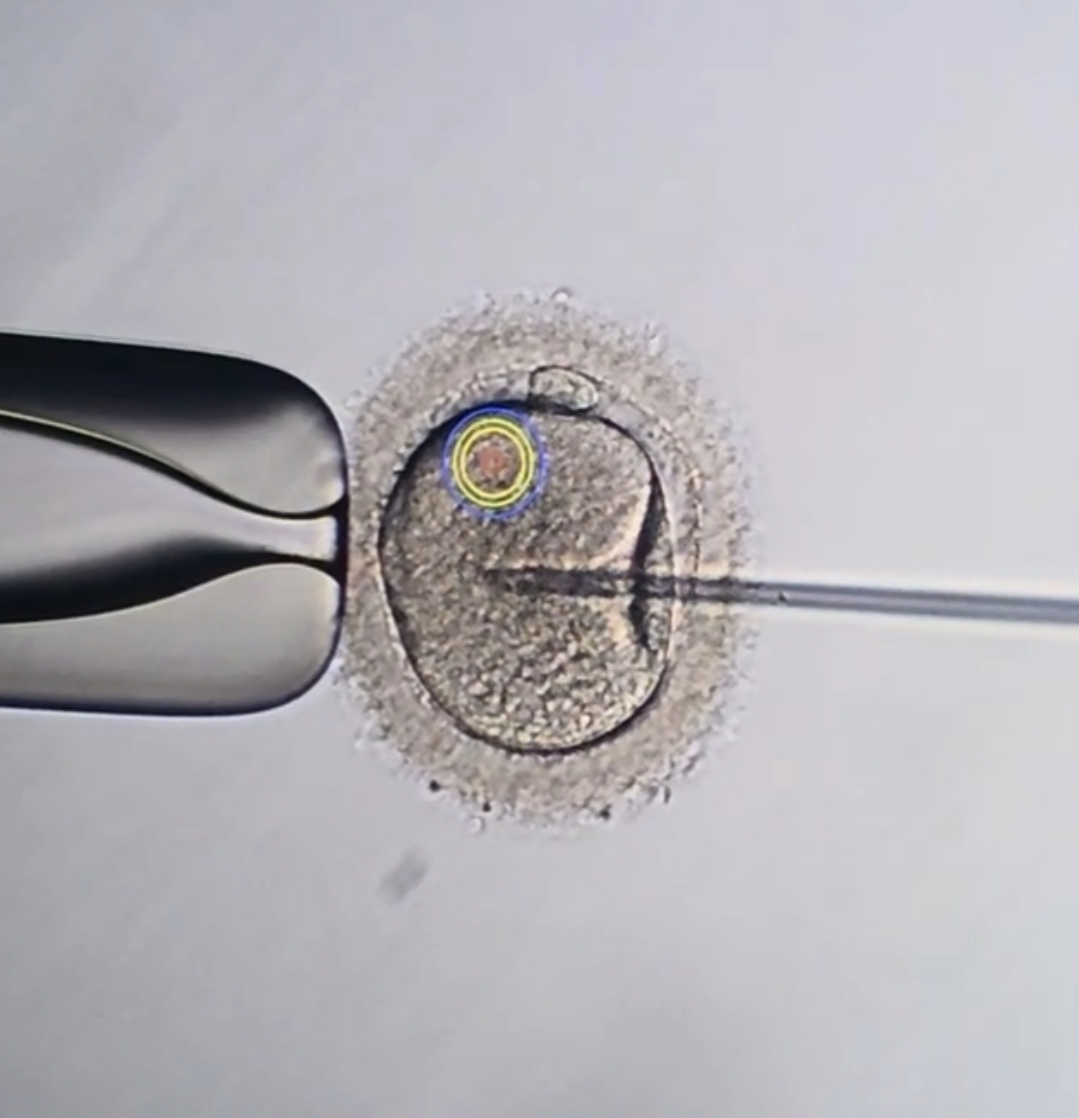
During ICSI, an embryologist uses a specialised microscope and equipment to inject a single sperm directly into a mature egg. If fertilisation occurs, the resulting embryo is monitored as it develops in the laboratory before an embryo transfer may be performed.
ICSI can be particularly useful when there are concerns about sperm being able to fertilise an egg naturally.
When Might ICSI Be Recommended?
Your fertility specialist may consider ICSI when there are specific fertility factors, including:
- Low sperm count
- Poor sperm motility
- Abnormal sperm morphology
- Previous difficulty with fertilisation during IVF
- Use of surgically retrieved sperm
- Certain male-factor infertility conditions
ICSI is not automatically necessary for everyone undergoing IVF. Your doctor and embryology team will consider your individual circumstances when determining the most appropriate fertilisation method.
IUI vs ICSI: What Are the Main Differences?
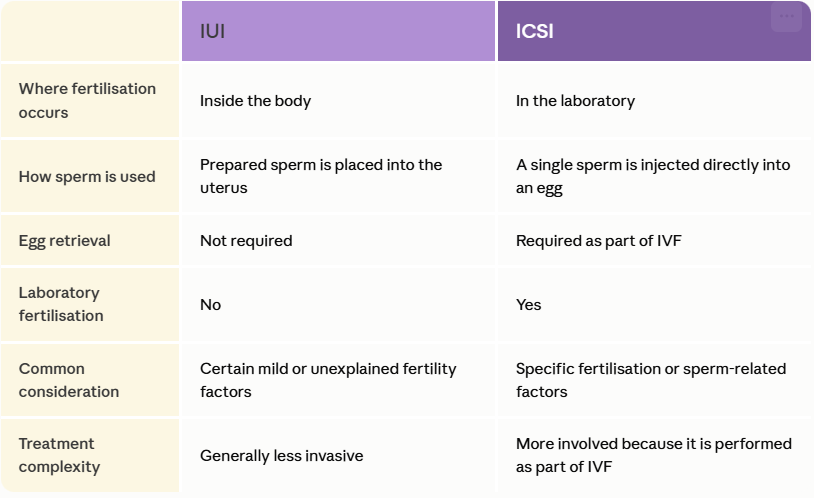
More involved because it is performed as part of IVF
The most appropriate treatment is not determined by one factor alone. A fertility specialist will consider the complete clinical picture before recommending an approach.
Can You Move From IUI to ICSI?
Yes. If IUI does not result in pregnancy, your fertility specialist may reassess your situation and discuss other treatment options.
The decision to move from IUI to IVF with ICSI is not based simply on the number of unsuccessful IUI cycles. Your doctor may consider:
- Your age
- Ovarian reserve
- Ovulation and menstrual history
- Sperm quality
- Fallopian tube condition
- The reason for infertility
- Previous treatment outcomes
- How you responded to previous treatment
For some patients, moving to IVF earlier may be considered based on their individual fertility factors rather than continuing with IUI.
Can I Skip IUI and Go Directly to IVF With ICSI?
In some circumstances, yes.
Not everyone needs to start with IUI. If there are factors that make IUI less likely to be successful, a fertility specialist may recommend proceeding directly to IVF, with or without ICSI depending on the individual situation.
For example, couples with significant sperm-related factors, blocked fallopian tubes, certain ovarian reserve concerns, or previous unsuccessful fertility treatment may be advised to consider IVF-based treatment.
Your doctor can help determine whether starting with IUI or proceeding directly to IVF is appropriate based on your fertility assessment.
How Do Doctors Decide Which Treatment Is Suitable?
There is no single fertility treatment that is right for everyone.
Before recommending a treatment, your fertility specialist may assess both partners and consider several factors.
1. Age
Age is an important factor in fertility treatment planning, particularly because egg quantity and quality can change over time.
2. Ovarian Reserve
Tests such as AMH and antral follicle count may provide information about ovarian reserve and help your doctor understand how the ovaries may respond to treatment.
3. Sperm Quality
Semen analysis can assess factors such as sperm concentration, motility and morphology. The results may help determine whether IUI is appropriate or whether IVF with ICSI should be considered.
4. Fallopian Tube Health
For IUI to have a chance of working, sperm generally needs to be able to reach the egg through the fallopian tube. If the fallopian tubes are blocked or significantly affected, IVF may be considered instead.
5. Previous Fertility Treatment
Your previous treatment history and outcomes can provide important information when deciding what to do next.
6. Your Overall Fertility History
Your medical history, previous pregnancies, duration of trying to conceive and other fertility factors are all considered when creating an individual treatment plan.
Is IUI Better Than ICSI?
IUI and ICSI are not simply “better” or “worse” versions of the same treatment.
They are different approaches designed for different fertility situations.
IUI may be appropriate when sperm can potentially fertilise the egg naturally but assistance is needed to improve the chances of sperm reaching the egg.
ICSI, as part of IVF, allows an embryologist to directly inject a single sperm into an egg and may be considered when there are specific factors that could affect fertilisation.
The right choice depends on your individual fertility assessment rather than choosing the treatment that sounds more advanced.

Frequently Asked Questions About IUI and ICSI
Is IUI less invasive than ICSI?
- Generally, yes. IUI does not require egg retrieval or laboratory fertilisation. ICSI is performed as part of IVF, which involves ovarian stimulation, egg retrieval and laboratory procedures.
How many IUI cycles should I try before IVF?
- There is no fixed number that applies to everyone. Your doctor may consider your age, diagnosis, ovarian reserve, sperm quality and previous treatment results when deciding whether to continue with IUI or consider IVF.
Can ICSI help with male infertility?
- ICSI may be considered for certain male-factor fertility issues, particularly when sperm count, motility or other sperm-related factors may make natural fertilisation more difficult.
Does everyone undergoing IVF need ICSI?
- No. ICSI is a specific fertilisation technique and is not automatically required for every IVF cycle. Your fertility specialist may recommend it based on your individual circumstances and previous treatment history.
Can IUI be done without fertility medication?
- Yes. IUI may be performed during a natural ovulatory cycle in some patients, while others may benefit from medication to stimulate ovulation. Your doctor will determine the most appropriate approach for you.
What happens if IUI does not work?
- If IUI is unsuccessful, your fertility specialist can review your treatment results and discuss whether another IUI cycle or an IVF-based treatment may be appropriate.
Choosing the Right Fertility Treatment for You
- Choosing between IUI and an IVF treatment that includes ICSI is not about finding one treatment that is best for everyone.
The most appropriate approach depends on your age, ovarian reserve, sperm quality, fallopian tube health, fertility history and individual treatment goals.
A fertility assessment can help identify the factors that may be affecting your chances of conception and allow your fertility specialist to recommend a treatment plan tailored to you.
If you are unsure whether IUI or IVF with ICSI may be suitable for you, speaking with a fertility specialist is an important first step.