As you get older, fertility can change, affecting the chances of conception and pregnancy in both men and women. Learn how age can influence egg and sperm quality, reproductive health, and fertility, and discover how early fertility assessment can help you understand your options and plan your next steps.

The Influence of Age on Achieving a Healthy Pregnancy
Age is an important factor in fertility and can influence the chances of conception and pregnancy in both men and women. As age increases, changes in egg and sperm quality may affect reproductive outcomes. Understanding these age-related changes can help you make informed decisions about your fertility and reproductive health.
At Genea Thailand, our fertility specialists can assess your individual circumstances and discuss appropriate options, including IVF, ICSI, and egg freezing, based on your fertility goals and needs.
Female Age and Fertility: Facts and Figures
Age is one of the most important factors affecting female fertility. As women get older, both the number and quality of eggs decline, which can affect the chances of natural conception and increase the risk of certain pregnancy complications. While advances in fertility treatment can provide additional options, age remains an important consideration when planning for pregnancy.
At Genea Thailand, our fertility specialists provide evidence-based information to help women understand how age may affect fertility and explore options based on their individual circumstances, including fertility assessment, egg freezing, IVF, and other assisted reproductive treatments.
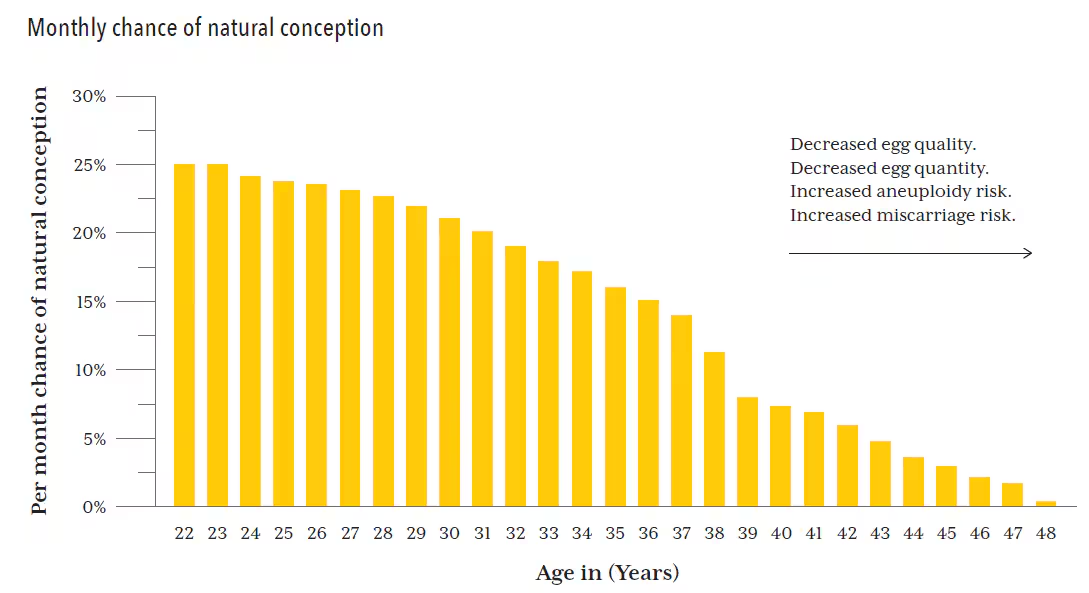
Younger women experiencing infertility may have identifiable factors such as blocked fallopian tubes, ovulation disorders, or male-factor infertility, including a low sperm count. In older women, declining egg quantity and quality become increasingly important factors affecting fertility. Advancing maternal age is also associated with a higher risk of chromosomal abnormalities and pregnancy complications, including miscarriage, particularly in early pregnancy.
Moreover, male age can also influence fertility and reproductive outcomes. As men age, changes in sperm quality may occur, including an increase in sperm DNA damage and certain genetic changes. These age-related factors may affect fertility and have been associated with an increased risk of certain pregnancy and health outcomes for the child. Understanding the potential impact of paternal age can help couples make informed decisions about their reproductive health.
Additionally, having had a baby before does not necessarily prevent couples from experiencing fertility challenges later. Secondary infertility refers to difficulty conceiving or carrying a pregnancy after having previously conceived or given birth. It can affect couples for a variety of reasons, including age-related changes, ovulation problems, changes in sperm quality, or other reproductive health factors.
Male Age and Fertility: Understanding the Impact
Male age can also influence fertility and reproductive outcomes. As men get older, changes in sperm quality may occur, including reductions in sperm motility and increases in sperm DNA damage. These age-related changes may affect the chances of conception and may contribute to a longer time to pregnancy. Advancing paternal age has also been associated with an increased risk of miscarriage and certain pregnancy and health outcomes for the child.
At Genea Thailand, our fertility specialists can provide comprehensive fertility assessments to evaluate factors that may affect conception. We help couples understand how paternal age may influence fertility and discuss appropriate treatment options based on their individual circumstances and family-building goals.

FAQs About Age and Fertility
Women are most fertile from their late teens to late twenties. After 30, fertility declines more rapidly. By age 36, the chance of conceiving each month drops to about half compared to early 20s, and by age 41, it decreases to just 4% per month.
This decline is due to a decrease in the number and quality of eggs. Women are born with about 2 million eggs, which reduce to around 400,000 by puberty, and continue to decline.
Men's fertility also diminishes with age, though less drastically than women's. Male factors account for over 40% of infertility cases, often influenced by sperm abnormalities and reduced sperm counts as they age.
Seeking Help for Age-Related Fertility Concerns
If you are in your late 30s or 40s and are planning a pregnancy, seeking an early fertility assessment can help identify factors that may affect conception. This is particularly important if you have known fertility concerns, such as blocked fallopian tubes, irregular ovulation, or other reproductive health conditions.
At Genea Thailand, our fertility specialists provide personalised fertility assessments and evidence-based treatment options to help you understand how age may affect your fertility. Based on your individual circumstances and family-building goals, we can discuss appropriate options, including IVF, ICSI, and egg freezing.


- Home Home
- Why Genea Why Genea
- Services Services
- Package Prices Package Prices
- Specialists Specialists
- Success Stories Success Stories
- International Patients International Patients
- Contact Us Contact Us
- Package Details Package Details
Services