Does Age Affect IVF Success?
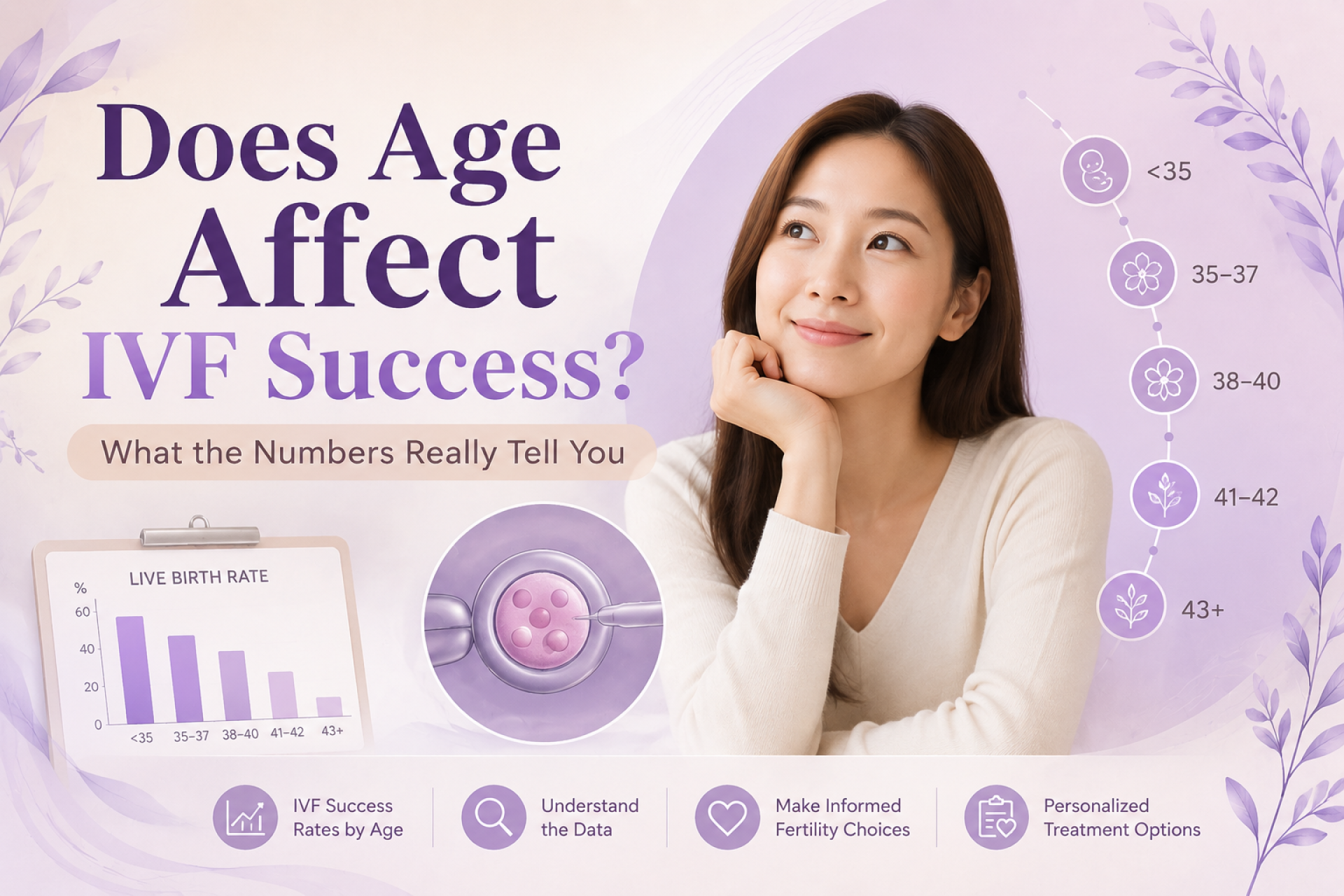
Does Age Affect IVF Success? What the Numbers Really Tell You
Meta Description: Wondering if your age affects IVF success? Discover real success rates by age group, what factors matter most, and why Thailand's GenPrime by Genea achieves up to 77% success rates.
Target Keywords: does age affect IVF success, IVF success rate by age, IVF success rate Thailand, IVF over 40, IVF under 35
Does Age Affect IVF Success?
Yes — age is one of the most significant factors in IVF success. But it's not the only one, and higher age doesn't mean zero hope. Understanding the real numbers helps you make informed decisions — not fear-based ones.
Why Age Matters in IVF
When we talk about age and IVF, we're really talking about egg quality and quantity.
As women age, both decline. Eggs in a 25-year-old are chromosomally healthier than those in a 42-year-old. That's biology — not pessimism. The result is that older eggs are less likely to fertilize successfully, less likely to develop into viable embryos, and more likely to result in miscarriage.
Here's what happens at the cellular level:
- Ovarian reserve decreases — fewer eggs are available to retrieve
- Egg quality declines — more chromosomal abnormalities occur
- Endometrial receptivity changes — the uterine lining may be less receptive
- Hormonal response weakens — the ovaries respond less strongly to stimulation medications
That said, the uterus ages more gracefully than the ovaries. Many women over 40 carry healthy pregnancies using donor eggs — with success rates comparable to younger women.
IVF Success Rates by Age: Real Data
Most clinics report success rates using two key metrics:
Implantation rate — the percentage of transferred embryos that successfully implant in the uterus
Clinical pregnancy rate — the percentage of cycles that result in a confirmed pregnancy (heartbeat detected)
Global Benchmarks (SART / ESHRE Data)
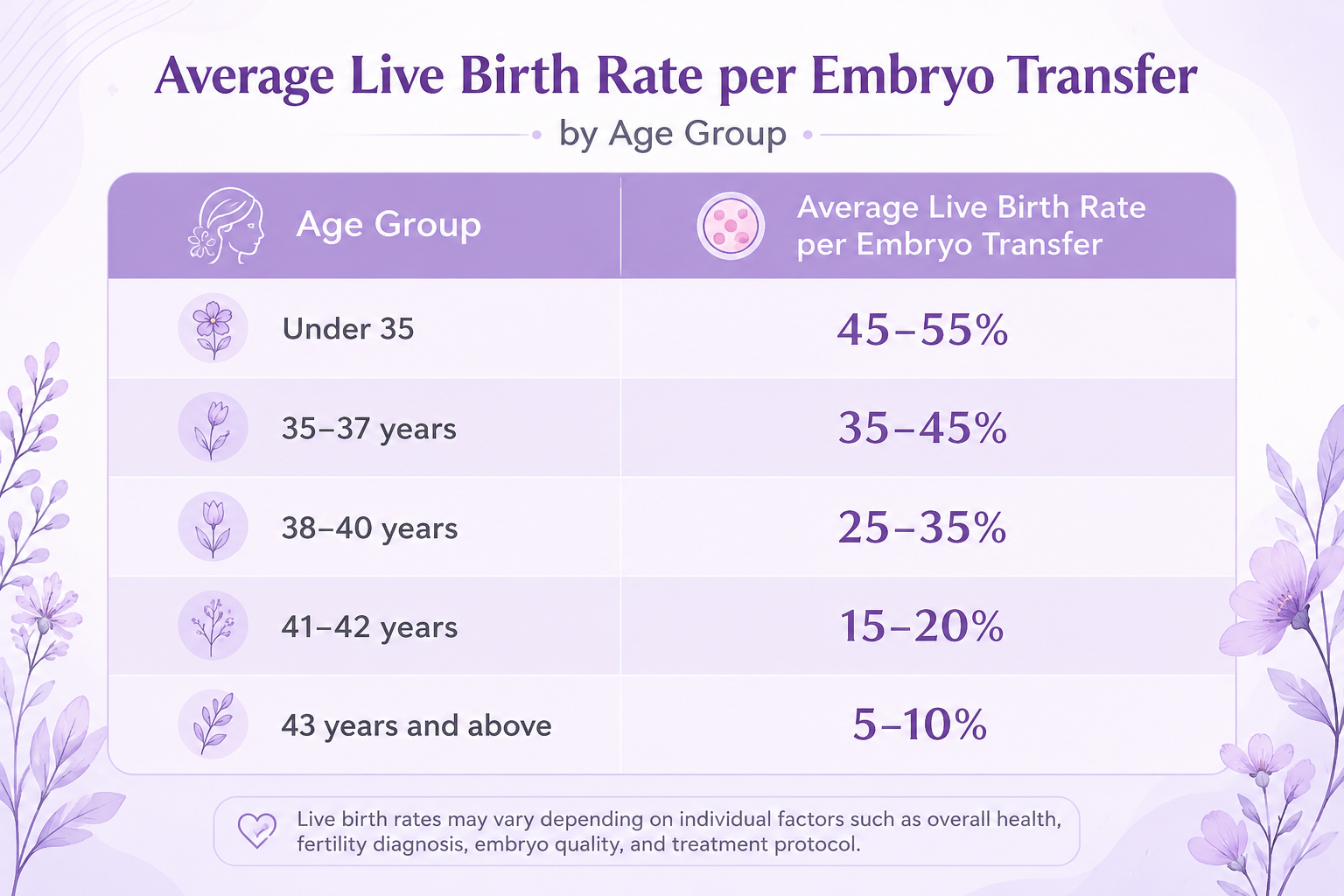
Source: Society for Assisted Reproductive Technology (SART)
GenPrime by Genea Thailand Results
At GenPrime by Genea — Thailand's world-leading fertility clinic — the numbers tell an impressive story:
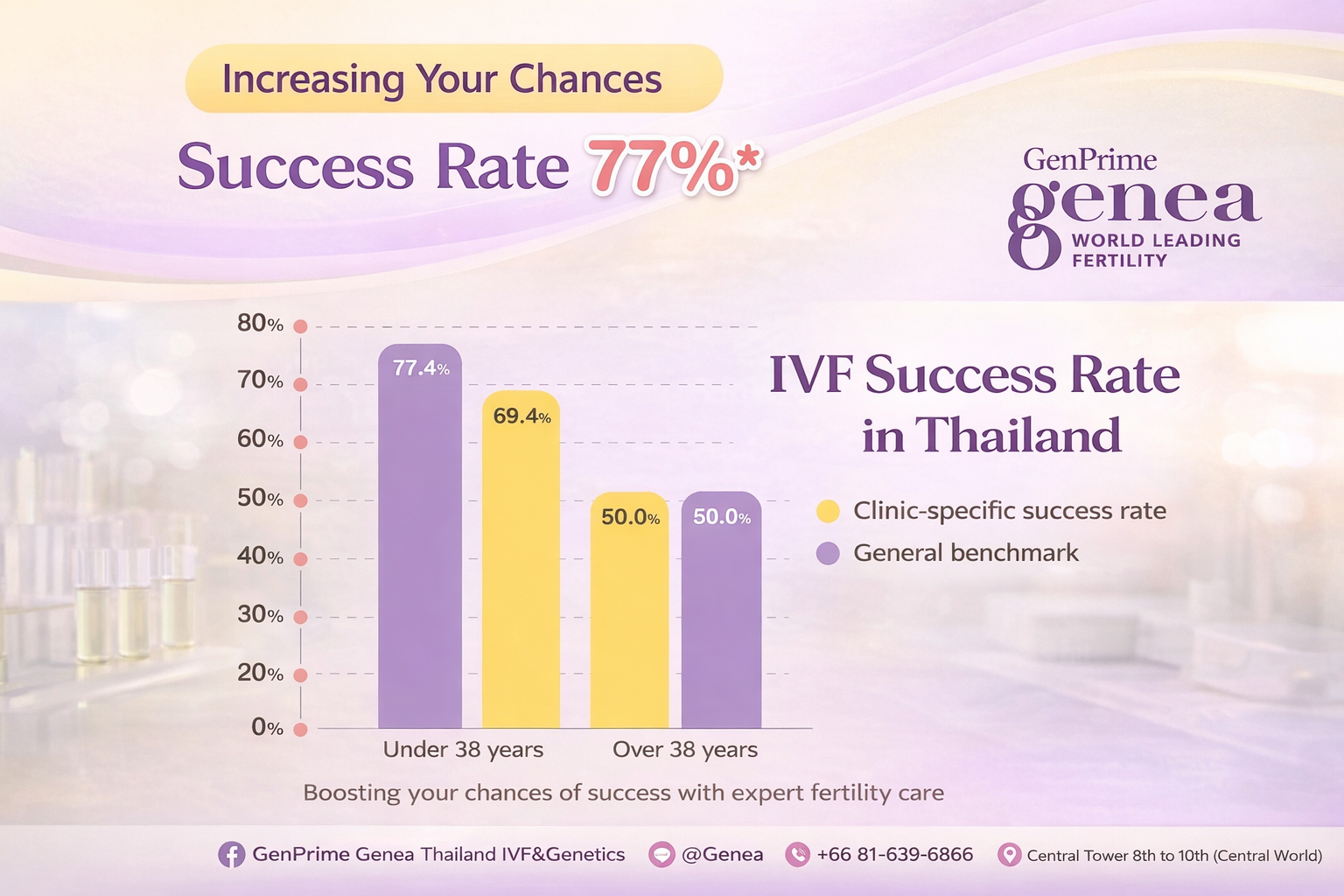
These results are significantly above the global average — particularly for patients under 38, where GenPrime's clinical pregnancy rate of 69.4% outperforms many clinics worldwide.
What Else Affects IVF Success Beyond Age?
Age is important — but it's one piece of a larger puzzle.
1. Ovarian Reserve (AMH & AFC)
Anti-Müllerian Hormone (AMH) levels and antral follicle count (AFC) give doctors a clearer picture of your egg supply than age alone. A 38-year-old with a healthy AMH may have better outcomes than a 33-year-old with diminished reserve.
2. Embryo Quality
The quality of the fertilized embryo matters enormously. Day-5 blastocysts (the gold standard) have significantly higher implantation rates than Day-3 embryos.
3. Genetic Testing (PGT-A)
Preimplantation Genetic Testing for Aneuploidies screens embryos for chromosomal abnormalities before transfer. This is especially recommended for women over 37, as it dramatically improves transfer success rates by only transferring chromosomally normal embryos.
4. Clinic Technology & Lab Standards
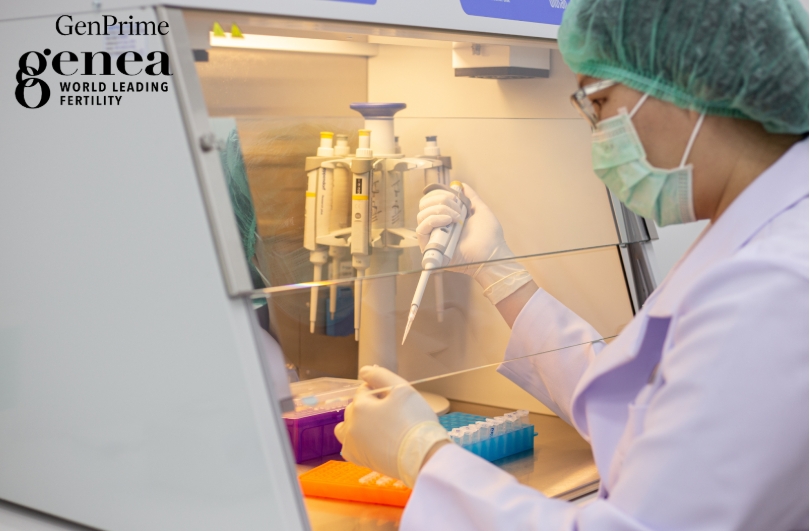
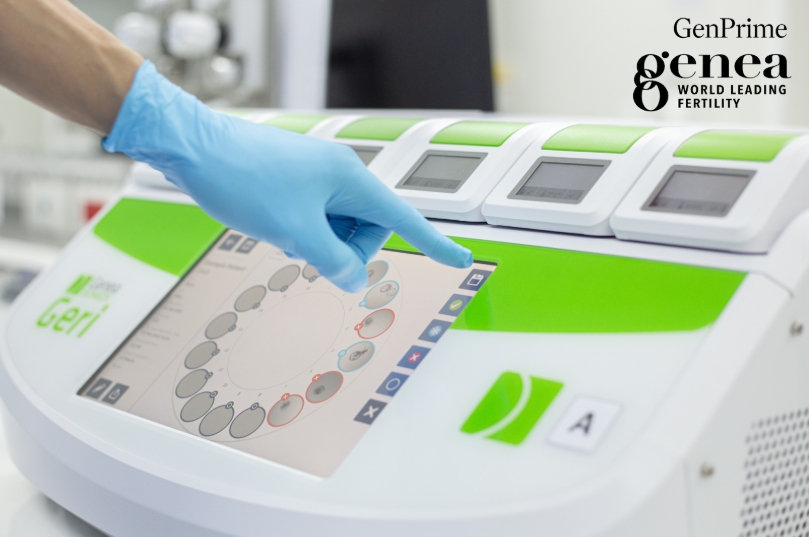
Not all IVF labs are equal. Temperature control, air quality, culture media, and embryologist expertise all influence whether an embryo survives to the blastocyst stage. World-leading labs like Genea's proprietary culture systems are engineered specifically for embryo development.
5. Male Factor
Sperm quality — motility, morphology, DNA fragmentation — affects fertilization rates. Advanced sperm selection techniques (IMSI, PICSI) can improve outcomes when male factor infertility is present.
6. Lifestyle Factors
- BMI within healthy range (18.5–24.9)
- Non-smoking status
- Stress management
- Adequate sleep and nutrition
Yes. Many women achieve successful pregnancies through IVF at 40 and beyond. Success rates are lower than at younger ages, but with PGT-A and advanced lab technology, the chances improve meaningfully. At GenPrime by Genea, patients over 38 still see a 50% clinical pregnancy rate — which is well above average for this age group.
Is IVF harder after 35?
IVF success does decline after 35, and more noticeably after 38. However, "harder" doesn't mean "impossible." Your doctor will assess your specific ovarian reserve, not just your birthday.
What is a good IVF success rate?
A clinical pregnancy rate above 40% per transfer is considered excellent for patients under 38. Rates above 50% — like those achieved at GenPrime — are outstanding by international standards.
Should I try IVF now or wait?
If you're over 35 and have been trying to conceive for 6 months or more without success, fertility specialists recommend seeking evaluation sooner rather than later. Egg quality and reserve decline accelerates in the late 30s.
Does the man's age affect IVF success?
Yes, though less dramatically. Sperm DNA fragmentation increases with age, which can affect fertilization and embryo quality. Men over 50 may see modest declines in outcomes.
When Should You Consult a Fertility Specialist?
Book a consultation if:
- You're under 35 and have been trying for 12+ months
- You're over 35 and have been trying for 6+ months
- You have irregular cycles, known endometriosis, PCOS, or previous pelvic surgery
- You've had two or more miscarriages
Earlier assessment means more options and often better outcomes.
Why Choose Thailand for IVF?
Thailand has become one of Asia's top destinations for fertility treatment — combining world-class medical technology with significantly lower costs than the US, UK, or Australia.
GenPrime by Genea brings together Genea's globally recognized fertility science (founded in Australia) with Thailand's medical excellence. The clinic serves international patients from across Asia, Europe, the Middle East, and beyond.
Key advantages for international patients:
- Success rates above global averages
- English-speaking medical team
- Transparent, all-inclusive pricing
- Streamlined scheduling for patients traveling from abroad
The Bottom Line
Does age affect IVF success? Absolutely. But age is a starting point for understanding your fertility — not a verdict on it.
The most important step is getting an accurate picture of your specific fertility status through bloodwork, ultrasound, and a consultation with an experienced fertility specialist. From there, you and your doctor can create a realistic plan based on your actual biology — not just your age.
Ready to understand your fertility potential?
Contact GenPrime by Genea today for a consultation tailored to your situation.
Central Tower, Unit 10, Central World, Bangkok
061-839-6886
Line: @Genea
Facebook: Genea Thailand IVF&Genetics